
Kitchen Island Ideas for Family Homes: Storage, Style, and Sociability All in One
If there's one feature that consistently tops our clients' wish lists, it's the kitchen island. And for good reason, a well-designed island doesn't just add worktop space, it becomes the heart of your home.
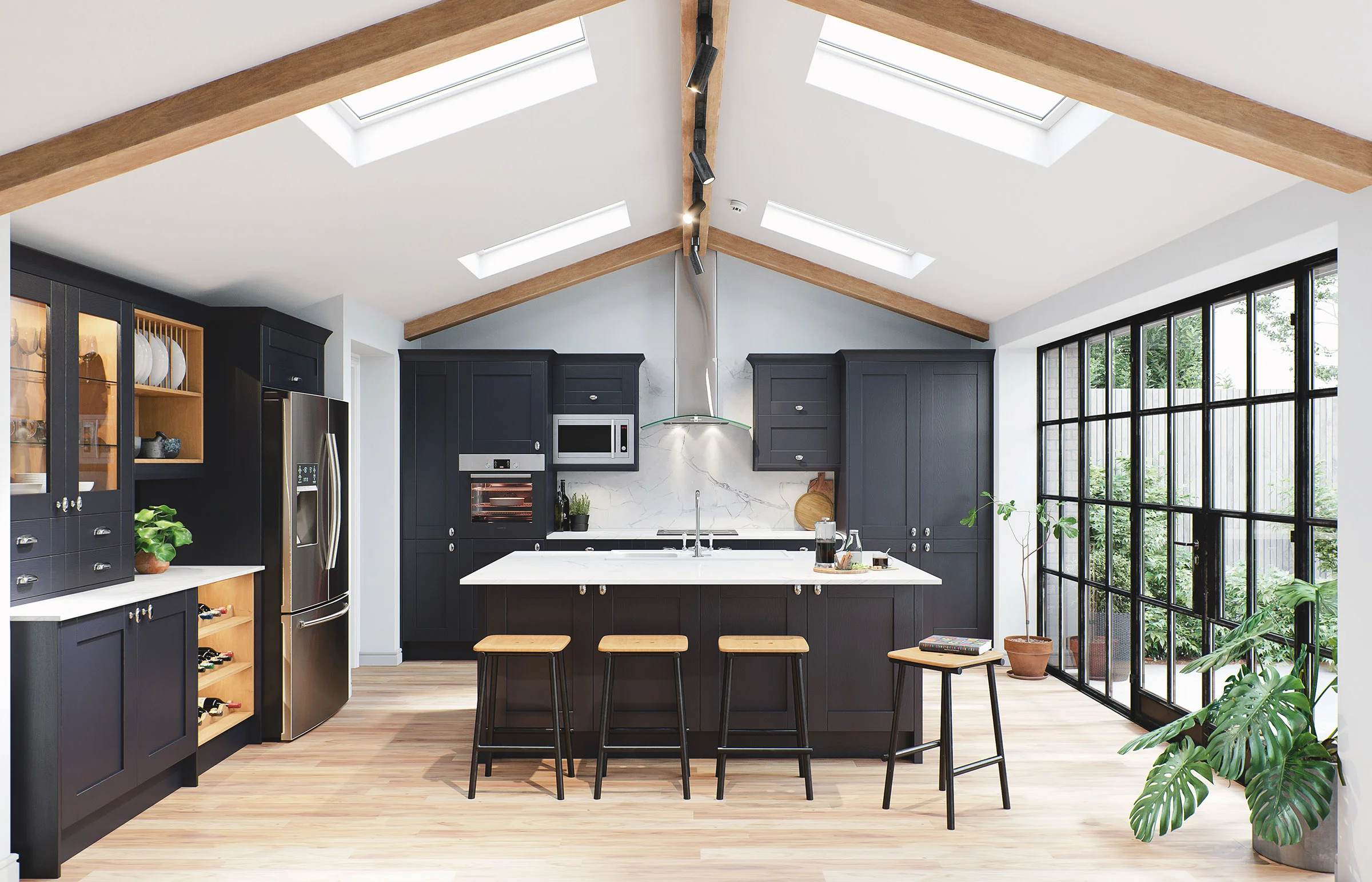
The right kitchen island transforms how a family lives. Done well, it becomes the homework station, the breakfast hub, the after-school snack counter, and the place everyone gravitates to. Done wrong, it's an expensive obstacle that clogs the kitchen and frustrates every single morning.
Why Families Need a Different Approach
A couple's kitchen island prioritises aesthetics and wine storage. A family island has entirely different demands. It needs to survive homework, art projects, sticky fingers, and the chaos of a school-morning breakfast rush. It needs seating that works for both a five-year-old and a tired parent. And it needs to function as a second prep zone when two people are cooking at once.
65% of families with children cite the kitchen as the most-used room in the home, according to a 2025 RIBA Homes Survey. The island sits at the centre of that usage. Designing it around family life, not just aesthetics, is non-negotiable.
Step One: Get the Size Right
This is where most projects go wrong. People underestimate how much floor space an island actually consumes, and overestimate how much room they have. The rules are simple and firm:
- Minimum island size: 900mm × 600mm (tight; barely workable for families)
- Recommended family island size: 1,200mm × 800mm minimum
- Clearance around all sides: 900mm absolute minimum; 1,050–1,200mm preferred
- With seating overhang: add 300mm to the seating side; allow 600mm width per seat
A kitchen room needs to be at least 4 metres wide to comfortably accommodate a useful island. Below that, the clearance becomes too tight for family traffic, particularly with young children and pushchairs in the mix.
The Best Kitchen Island Ideas for Family Homes
1. The Breakfast Bar Island
The most popular family island configuration. One side has an extended worktop overhang, typically 300mm, with bar stools underneath. It creates a dedicated eating zone separate from the dining table, perfect for quick weekday breakfasts and after-school snacks. Bar stool height for standard 900mm-high worktops: 650–700mm seat height. Always check this before buying stools — it's a common and frustrating mismatch. Works best in L-shape or open-plan kitchens where the island faces into the living space.
2. The Prep Sink Island
Adding a second sink to the island is a game-changer for busy family kitchens. It separates prep (island) from washing up (main sink), which means two people can work simultaneously without colliding. A prep sink, typically 300–400mm wide, costs £150–£600 for the sink itself, plus plumbing costs of £300–£800 depending on how far the waste run needs to travel.
3. The Storage-Heavy Island
For families with limited kitchen storage elsewhere, the island becomes a workhorse. Deep pan drawers on one side, a built-in larder pull-out on the other, and a row of deep drawers facing the cook. Blum Legrabox drawer systems, the trade standard, run £180–£400 per unit. Don't forget to build in a charging drawer or USB socket strip — having a dedicated charging zone reduces worktop clutter immediately.
4. The Statement Island With Contrasting Colour
The most visually impactful move in family kitchen design: a dark or bold island against lighter perimeter units. Navy, forest green, charcoal, and deep teal all work brilliantly. It anchors the space visually, hides daily wear better than light colours, and gives the kitchen a focal point that photographs beautifully. Two-tone kitchen configurations including a contrasting island increased by 41% in UK kitchen sales between 2023 and 2025, according to Houzz UK.
5. The Extended Island With Dining Space
In open-plan family homes, the island can replace or supplement a separate dining table entirely. An extended worktop — 2,400mm or longer, with a lower dining section at one end creates a multi-height surface for different uses. The cooking end sits at standard 900mm worktop height; the dining end drops to 720–750mm for comfortable seated dining. Allow 600mm width and 700mm depth per dining seat for comfortable family use.
Family-Friendly Island Materials
Aesthetics matter. But in a family home, durability matters more. Here's an honest rundown of how the main worktop options perform in real family use:
| Material | Durability | Maintenance | Price (installed) | Verdict |
|---|---|---|---|---|
| Quartz | Excellent | Low | £300–£700/lm | Best all-round family choice |
| Sintered stone | Superior | Minimal | £500–£900/lm | Premium; heat-proof, virtually indestructible |
| Solid wood | Moderate | High | £200–£500/lm | Good as a secondary prep section only |
| Honed marble | Poor | Very High | £600–£1,200/lm | Avoid in family kitchens — etches and stains |
Kitchen Island Costs for UK Family Homes in 2026
| Island Type | Basic Spec | Mid-Range | Premium |
|---|---|---|---|
| Simple worktop island (no services) | £1,500–£3,000 | £3,500–£6,000 | £7,000–£12,000 |
| Island with breakfast bar seating | £2,000–£4,000 | £4,500–£8,000 | £9,000–£15,000 |
| Island with prep sink | £2,500–£5,000 | £5,500–£10,000 | £10,000–£18,000 |
| Island with hob and extraction | £4,000–£8,000 | £8,000–£15,000 | £15,000–£30,000+ |
| Extended island with dining section | £3,500–£7,000 | £7,000–£14,000 | £14,000–£25,000 |
Indicative 2026 UK market rates including cabinetry, worktop, and basic installation. Appliances, plumbing, and electrics are additional. Always obtain at least three quotes.
What to Include — and What to Avoid
Must-Haves for Family Islands
- Deep pan drawers — far more practical than doors and shelves for everyday storage
- At least 300mm seating overhang — essential if a breakfast bar is a goal
- Integrated waste and recycling — keeps bins off the floor and out of walkways
- Rounded or eased worktop edges — small children and sharp corners are a bad combination
- USB sockets or a charging drawer — you'll use it every single day
Common Mistakes to Avoid
- Hob on the island without proper extraction. Ceiling cassette extractors cost £800–£3,000 and are visually dominant. Think hard before moving the hob away from the wall.
- Open shelving on the island base. Looks great in showrooms, becomes a dumping ground within a week. Specify drawers and doors instead.
- White or very pale island cabinets. Dark cabinets hide the scuffs, kicks, and abuse a family island takes. Light cabinets on the island are a high-maintenance choice.
Adding an Island to an Existing Kitchen
A freestanding or furniture-style island can be added to almost any kitchen without building work, provided the clearances are met. These start from around £800–£2,500 for a quality freestanding option. A built-in island connected to services, sink, hob, dishwasher, requires plumbing and electrical alterations, which are manageable in most UK homes but need a professional assessment before committing.
If your existing kitchen layout makes safe, usable clearance impossible, don't force it. A well-designed kitchen without an island beats a cramped one with.
Frequently Asked Questions
A built-in kitchen island with worktop and cabinetry costs between £2,000 and £15,000+ depending on size, materials, and whether services (sink, hob, dishwasher) are integrated. Freestanding islands start from around £800. Always add plumbing (£300–£800) and electrical costs separately if services are involved, and include a 15% contingency.
Quartz is the best all-round choice for family kitchen islands — it's non-porous, stain-resistant, low-maintenance, and durable. Prices run from £300–£700 per linear metre installed. Sintered stone (Dekton or Lapitec) is the premium upgrade for families who cook heavily. Avoid honed marble, which etches and stains easily with normal family use.
Allow 600mm of width per stool as a minimum — 650–700mm per person for comfortable seating. A 1,200mm island can seat two; 1,800mm seats three; 2,400mm seats four. Stool seat height should be 650–700mm for a standard 900mm worktop height. Always verify stool dimensions against your specific worktop height before purchasing.
A prep sink is the more practical choice for most family islands. It enables two people to work simultaneously — one at the main sink, one at the island — and is structurally simpler and less expensive than installing a hob. A hob on the island requires ceiling extraction, gas or induction supply rerouting, and creates heat in the social zone of the kitchen. Only choose an island hob if the layout genuinely demands it.
Darker colours — navy, forest green, charcoal, or deep teal — are the most practical choice for family kitchen islands. They hide scuffs, kicks, and general daily wear far better than light or white cabinets. Two-tone designs (dark island, lighter perimeter units) are also the most popular kitchen configuration in the UK right now, with a 41% sales increase between 2023 and 2025.
No. Installing a kitchen island — whether freestanding or built-in — does not require planning permission in the UK. However, if the island installation forms part of a wider kitchen extension or structural alteration, building regulations may apply. Connecting new gas appliances always requires a Gas Safe registered engineer regardless of planning status.
Deep pan drawers are the most practical island storage for families — they provide easy access, full visibility, and hold significantly more than shelved cupboards. Integrated waste and recycling units keep bins off the floor. A charging drawer or integrated USB sockets reduces worktop clutter. Avoid open base shelving — it becomes a dumping ground in a busy family kitchen within days.
Yes, and it's a popular choice in family kitchens. An island dishwasher works best when positioned adjacent to an island sink, mirroring the main kitchen workflow. It requires a plumbing supply and waste connection, adding £300–£600 to installation costs. Ensure the dishwasher door opens away from the main traffic route — a door swinging into a walkway is a daily frustration.
Start Your Kitchen Journey Today
Whether you're budgeting for a luxury kitchen, exploring Shaker styles, planning a family island, or looking for 2026 design inspiration — our expert designers are ready to help. Book a free, no-obligation consultation at our Hoylake showroom.
Book a Free Consultation →